THE BLACK BOX HOUSE @ AROOZOO AVE
Architecture + Interior Design
4 200 sq ft Corner Terrace
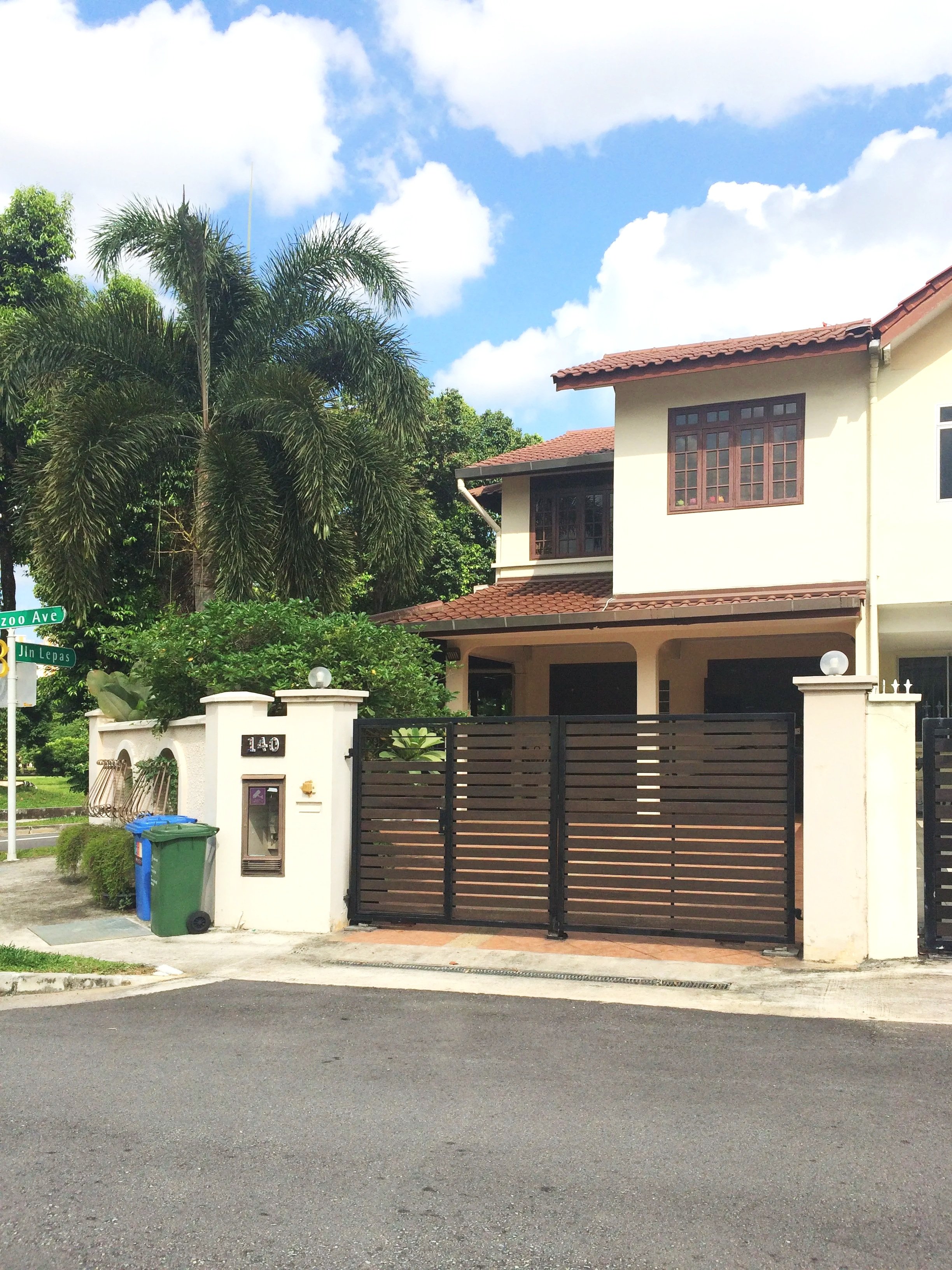
Original Existing Condition
The pre-renovation façade prior to the introduction of the new attic extension, enlarged upper-floor volumes and contemporary architectural envelope.
Adaptive Reuse, Extension & Contemporary Transformation
MU Architects was commissioned to undertake the comprehensive transformation of an existing corner terrace residence located at Aroozoo Avenue. Rather than pursuing complete redevelopment, the design approach focused on retaining and strengthening the existing structural framework while reimagining the house as a contemporary family home suited to present-day living requirements.
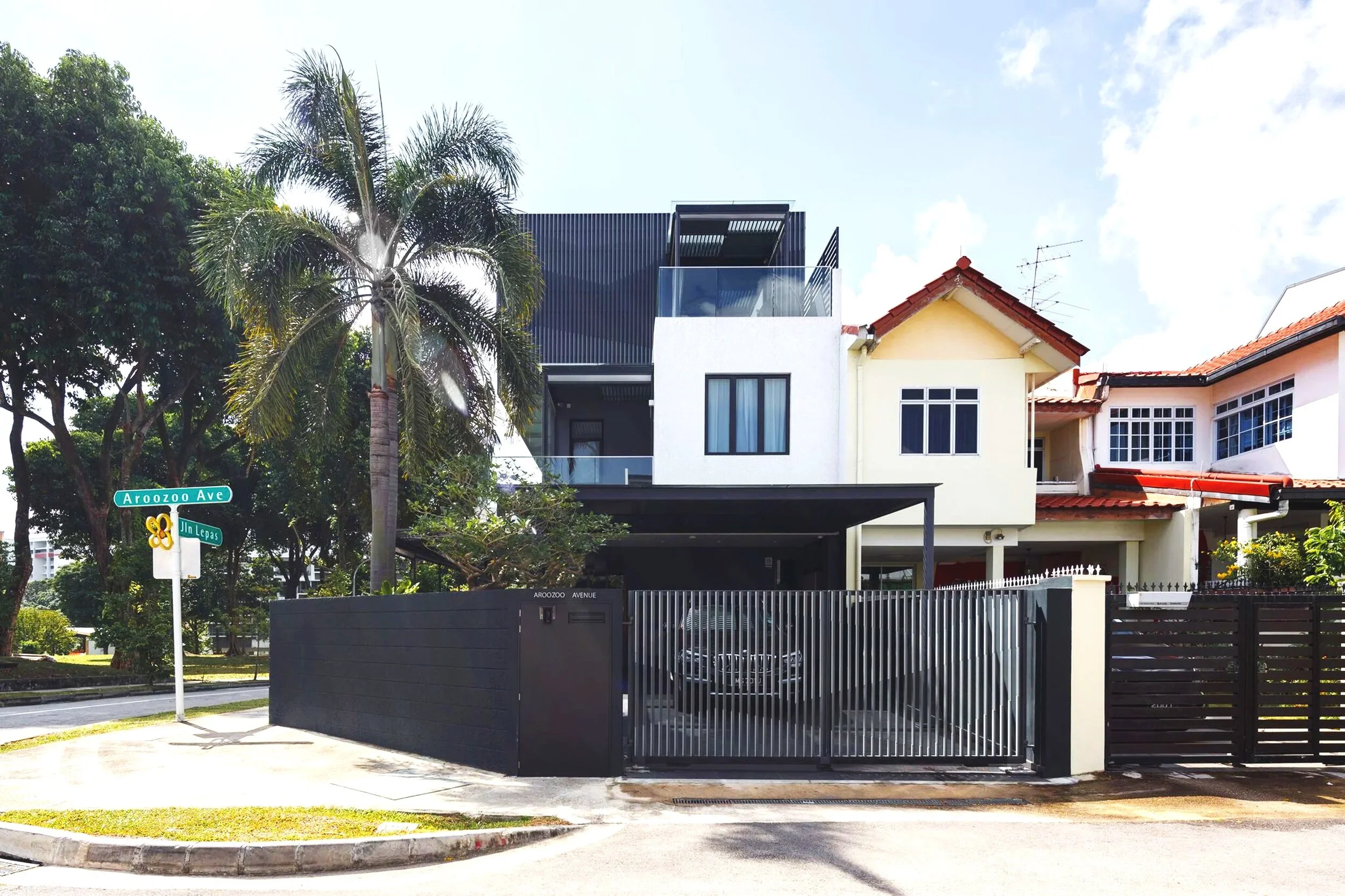
Completed Corner Terrace Transformation
The renovated residence combines retained structural elements with carefully integrated contemporary additions, creating a distinctive architectural identity that balances preservation and renewal.
The project began with a careful evaluation of the original building fabric, spatial organisation and long-term potential of the property. Through a series of targeted architectural interventions, the residence was expanded both vertically and horizontally to increase usable floor area while preserving the fundamental character of the existing structure. A new attic extension was introduced, creating additional accommodation and enhancing the overall functionality of the house.
Beyond the increase in floor space, the renovation sought to establish a stronger architectural identity. Existing façade elements were selectively removed, simplified and reconfigured to create a more cohesive composition. New architectural volumes were introduced to clearly express the additions while maintaining visual harmony between the retained structure and contemporary interventions.
Particular attention was given to improving natural light, spatial openness and connectivity throughout the residence. Interior spaces were reorganised to support modern family lifestyles, while new openings, terraces and glazed elements strengthen the relationship between indoor and outdoor environments.
The resulting design demonstrates how an ageing terrace house can be successfully adapted for contemporary living through thoughtful planning, strategic expansion and a disciplined architectural language. By balancing preservation and transformation, the project establishes a renewed residential identity while extending the lifespan and value of the existing home for future generations.
BLACK BOX TRANSFORMATION & FAÇADE RENEWAL
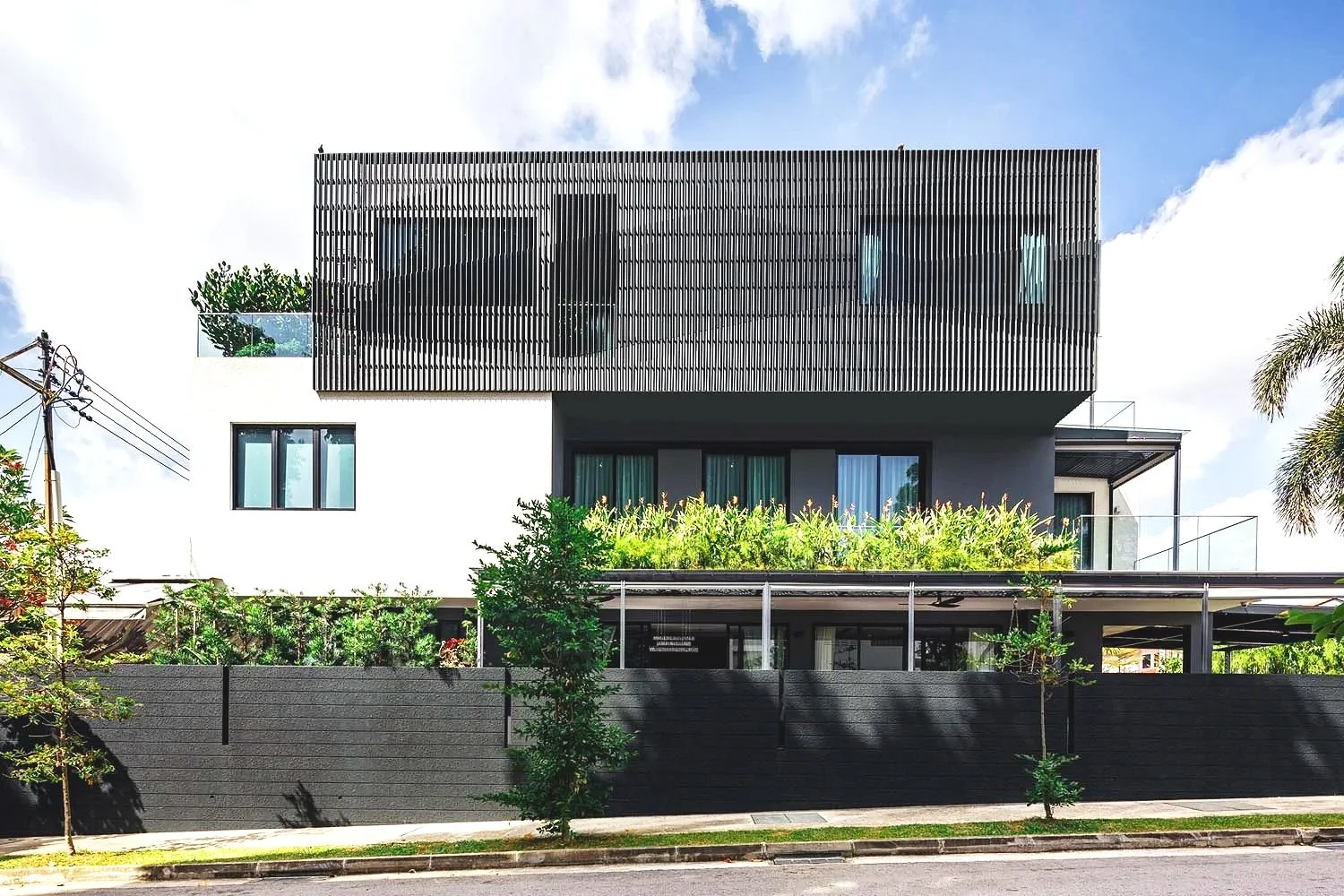
Completed Black Box Façade
The newly introduced black-clad upper volume unifies the attic extension and upper-floor additions, creating a distinctive architectural identity while providing privacy and solar protection.
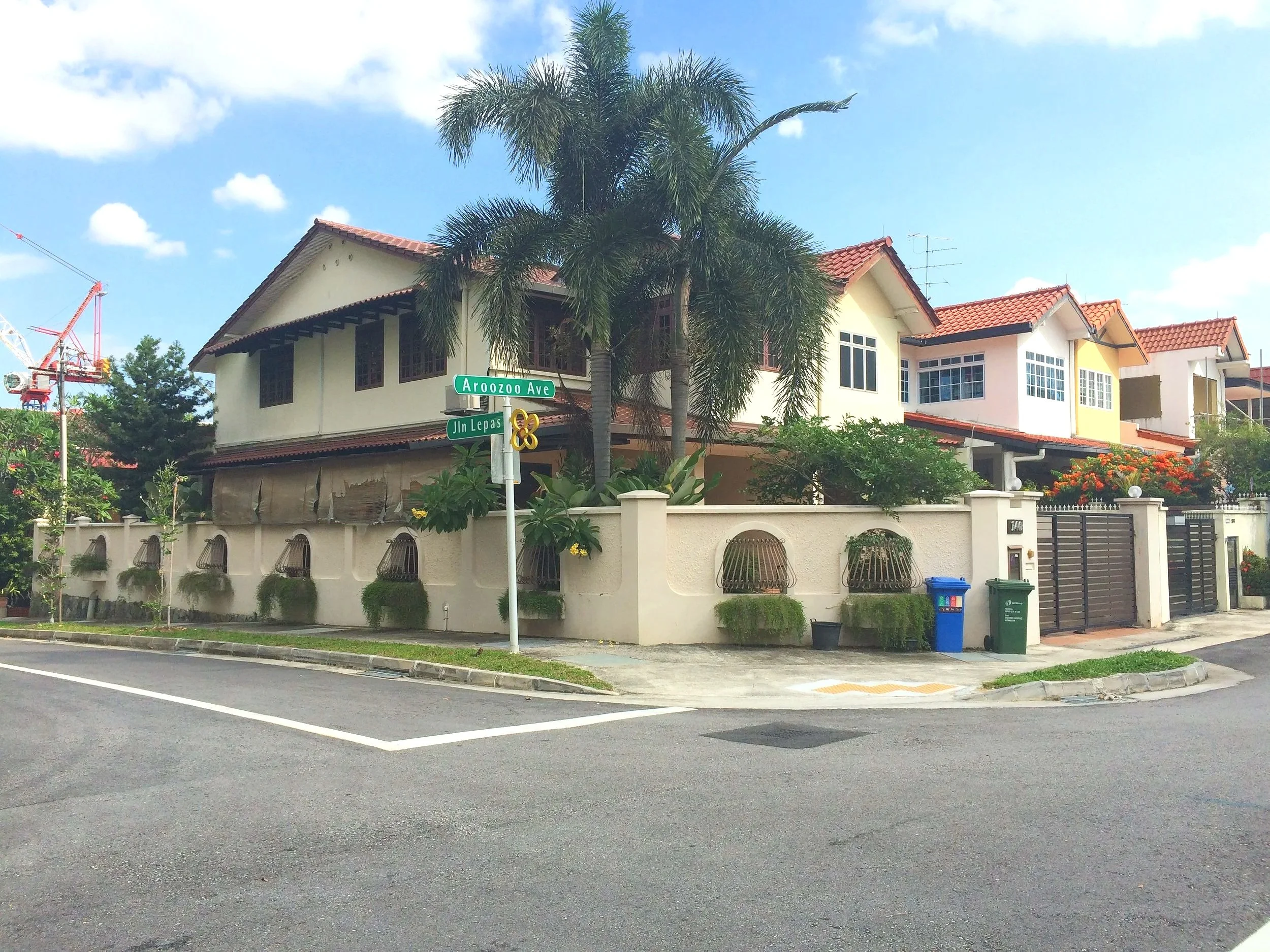
Original Existing Corner Terrace
The residence prior to renovation, before the introduction of the Black Box volume, façade screening system and contemporary architectural additions.
The architectural transformation is anchored by the introduction of a distinctive black-clad upper volume that redefines the identity of the existing corner terrace house. Rather than concealing the additions, the new intervention is expressed as a clearly articulated architectural element that establishes a strong contemporary presence while remaining respectful of the surrounding residential context.
The newly constructed attic and expanded upper-storey extensions are unified within a carefully proportioned “Black Box” volume. Wrapped in a finely detailed system of vertical aluminium fins, the façade introduces texture, depth and visual rhythm while providing effective solar shading for the interior spaces. The filtering effect of the fins softens direct sunlight, enhances privacy and creates constantly changing patterns of light and shadow throughout the day.
A key objective of the renovation was to transform the visual character of the original house without erasing its history. The existing building served as the foundation for a renewed architectural language in which retained elements and contemporary additions coexist as a coherent whole. Through the disciplined use of contrasting materials, simplified geometries and carefully controlled proportions, the residence achieves a renewed identity that is both distinctive and timeless.
The comparison between the original and completed façades illustrates the extent of the transformation. What was once a conventional corner terrace dwelling has been reimagined as a contemporary urban residence defined by clarity, environmental responsiveness and architectural restraint. The resulting composition demonstrates how thoughtful additions and façade interventions can dramatically enhance both the performance and character of an existing home.

Side Elevation & Façade Detail
The articulated aluminium screening system introduces depth, texture and environmental performance while establishing a strong visual identity for the upper-level additions.
ARCHITECTURAL IDENTITY & FACADE ARTICULATION
The architectural identity of the residence is defined by the introduction of a carefully proportioned black-clad volume that establishes a strong contemporary presence within the residential streetscape. Rather than relying on decorative gestures, the design derives its character from the clarity of its architectural language, the refinement of its detailing and the disciplined composition of solid and void.
Wrapped in a finely articulated system of vertical aluminium fins, the upper-level addition is transformed into a dynamic architectural element that responds to changing daylight conditions throughout the day. The layered screening system introduces depth, texture and visual rhythm while softening the perceived scale of the enlarged building mass.
Beyond its visual qualities, the façade performs an important environmental function. The vertical fins filter direct sunlight, reduce solar heat gain and enhance privacy for the upper-level living spaces. The resulting interplay of light, shadow and transparency contributes to a constantly evolving façade expression that changes with time and viewpoint.
At the prominent street corner, the sculpted geometry of the Black Box volume reinforces the identity of the residence and creates a memorable architectural presence. The integration of environmental performance, material expression and formal clarity demonstrates how contemporary interventions can enrich an existing structure while remaining sensitive to its surrounding context.
ARRIVAL COURT & LANDSCAPE INTEGRATION
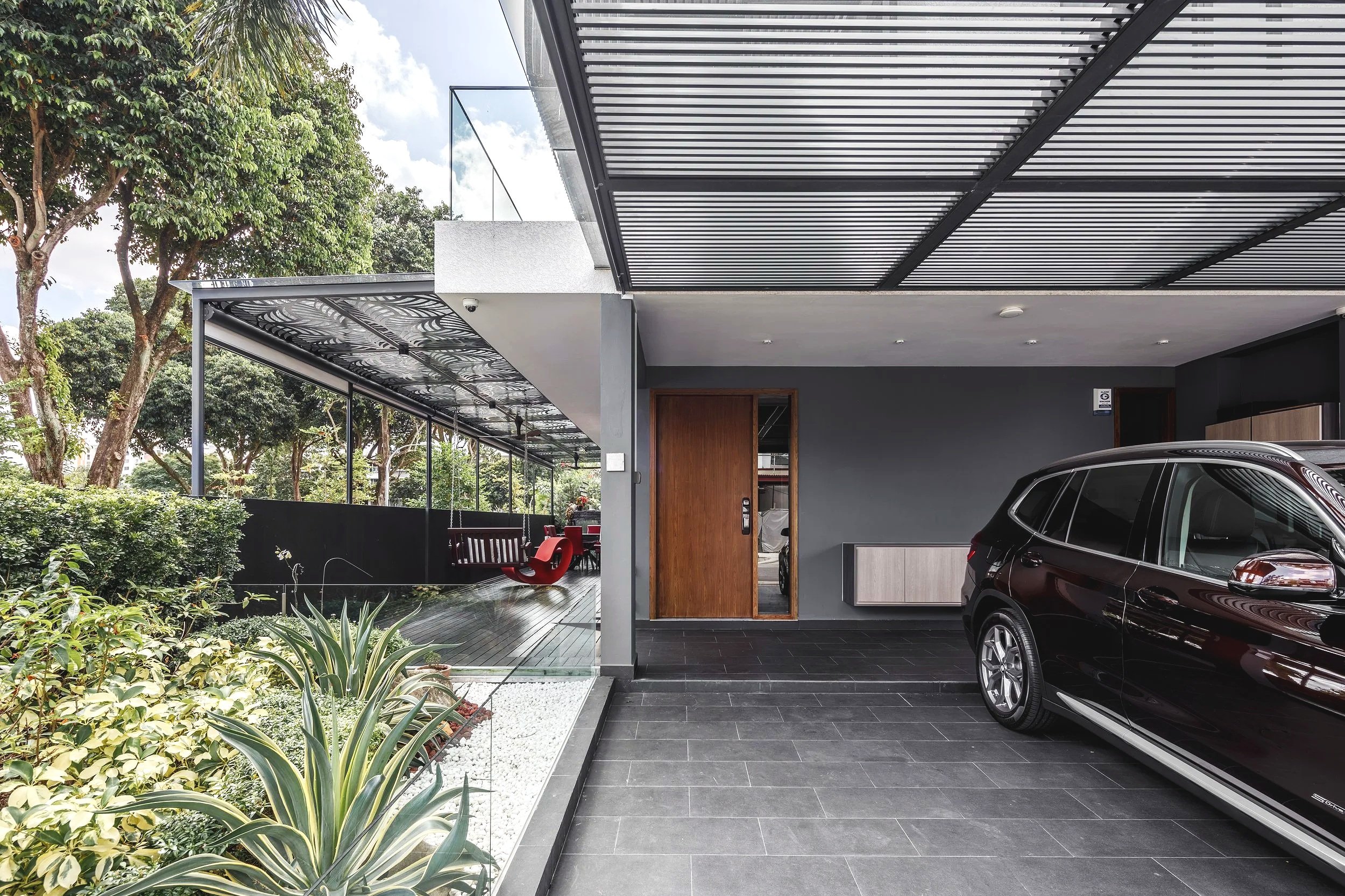
Arrival Court & Car Porch
Dark material finishes, integrated landscape elements and a sheltered arrival sequence create a refined transition between the public realm and the private residence.
The arrival sequence is conceived as an extension of the architectural language established by the Black Box façade. Rather than functioning merely as a vehicular access point, the entrance court is carefully designed as a transitional environment that mediates between the public streetscape and the privacy of the residence. Through the use of dark material finishes, integrated planting and sheltered outdoor spaces, the arrival experience establishes a calm and welcoming first impression.

Original Front Façade
Existing front elevation prior to renovation, showing the original corner terrace configuration before architectural transformation.
The car porch is positioned beneath the extended upper-storey volume, reinforcing the visual lightness of the architecture while providing practical protection from Singapore’s tropical climate. A restrained palette of dark stone finishes, textured surfaces and warm timber accents creates a sense of refinement and continuity between the exterior architecture and interior living spaces. The interplay of light, shadow and materiality contributes to a dynamic yet understated architectural character.
Adjacent to the arrival court, a sheltered side terrace extends the usable living environment beyond the enclosed interior. Framed by landscape planting and protected by a custom-designed canopy, the space functions as an informal outdoor retreat that encourages natural ventilation and everyday interaction with the surrounding environment. The terrace provides an intermediate zone that blurs the boundary between indoor and outdoor living.
CANOPY SCREENING & OUTDOOR LIVING

Laser-Cut Trellis Canopy Detail
Intricately patterned metal screening provides shade, privacy and environmental performance while creating dynamic patterns of light and shadow throughout the day.

Sheltered Side Terrace
An outdoor living space protected by a custom-designed canopy that encourages natural ventilation and strengthens the connection between architecture and landscape.
A distinctive feature of the project is the custom-designed laser-cut metal trellis integrated into the canopy structure. Inspired by organic patterns found in nature, the screening element introduces visual richness while serving important environmental functions. Beyond its decorative quality, the trellis filters direct sunlight, reduces heat gain and enhances privacy for the outdoor living areas. As daylight moves across the surface, the perforated pattern creates constantly changing shadows that animate the space throughout the day.
The sheltered side terrace extends the living environment beyond the enclosed interior and provides a comfortable outdoor retreat throughout the year. Protected by the canopy and framed by landscape elements, the space encourages natural ventilation while maintaining a strong visual connection to the surrounding neighbourhood. Together, the canopy, terrace and landscape create a transitional zone that balances openness, comfort and environmental responsiveness.
The integration of architecture, shading devices and outdoor living reflects the broader design strategy of the residence. Rather than treating environmental performance as a separate technical layer, these elements are incorporated into the architectural expression itself, resulting in spaces that are functional, climate-responsive and visually distinctive.
INTERIOR MATERIALITY & SPATIAL ATMOSPHERE

Dry Kitchen & Social Hub
The open-plan kitchen serves as the social heart of the residence, where carefully selected materials and natural light create a calm and welcoming atmosphere.
The interior design strategy establishes a deliberate contrast with the contemporary architectural expression of the exterior. While the building envelope is defined by clean geometric forms and dark monolithic volumes, the interior introduces a richer and more tactile material palette that emphasises warmth, comfort and everyday liveability.
Natural stone, textured finishes and carefully selected materials are layered throughout the residence to create depth, visual richness and a strong sense of permanence. Rather than functioning purely as decorative elements, these materials contribute to a carefully curated atmosphere that reflects the character and lifestyle of the homeowners.
The dry kitchen forms the social heart of the house and exemplifies this material approach. Grey stone surfaces, marble flooring and warm timber accents are combined within a restrained palette that balances sophistication with practicality. Generous glazing allows natural daylight to animate the surfaces throughout the day, creating subtle variations of light, texture and shadow.
Beyond aesthetics, the interior is designed to support contemporary family living. Open-plan spatial arrangements encourage visual connectivity between functional zones while maintaining a calm and uncluttered environment. The resulting interior feels intimate, refined and welcoming while maintaining a strong relationship with the architectural language established by the exterior.
PRIVATE RETREAT & EARTH-TONED LIVING

Master Bedroom, Study & Stair Connection
Earth-toned materials, textured brick surfaces and warm timber finishes create a calm and intimate retreat, while the staircase establishes a seamless connection between the private living quarters and the communal spaces below.
Throughout the residence, the relationship between interior spaces and the surrounding landscape remains an important design consideration. Generous glazing, screened openings and sheltered outdoor terraces establish visual connections with greenery while preserving privacy. These elements encourage natural ventilation and create a seamless transition between indoor and outdoor living environments.
Particular attention was given to the upper-level retreat spaces, where materiality, natural light and carefully framed views contribute to a sense of calm and wellbeing. Conceived as a private sanctuary, the attic-level master suite integrates architecture, landscape and everyday living through a carefully curated palette of earth-toned materials and natural textures.
Textured brick surfaces, warm timber finishes and handcrafted details create an atmosphere that feels grounded, intimate and welcoming. Generous glazing frames views of the surrounding greenery, allowing daylight to animate the interior throughout the day while reinforcing a strong connection to nature. The resulting environment offers a tranquil retreat from the more active communal spaces below.
The staircase serves as a key architectural element linking the different levels of the residence. Combining steel, timber and natural light, it creates a seamless transition between the shared living areas and the private quarters above. Together with the earth-toned material palette, the stair sequence reinforces continuity in both spatial experience and architectural expression, balancing comfort, privacy and everyday functionality within a cohesive architectural narrative.
OPEN-AIR MASTER BATH & GARDEN RETREAT

Open-Air Master Shower
Dense tropical planting provides privacy while allowing natural ventilation, daylight and open-sky bathing within a serene garden setting.